Photo credit: Crystal Heath / Our Honor / We Animals
The Malaysian government has announced a holistic review of the country’s pig farming industry, including the Modern Pig Farming (MPF) model that has been promoted in recent years as a more sustainable way forward.
The review is being led by the Malaysian Ministry of Agriculture and Food Security and will examine the long-term sustainability of the industry. This includes issues such as environmental management, disease control, and the role of centralized farming systems.
Malaysia currently has more than 300 registered pig farms, with a growing portion transitioning to Modern Pig Farming systems. These developments are part of broader efforts to modernize the sector and address long-standing concerns around pollution, disease outbreaks, and land use conflicts.
At first glance, modernization appears to offer practical answers to many of these challenges.
But as discussions about the future of pig farming continue, one important question remains largely absent from the public conversation.
What does modernization mean for the animals themselves?
Modern Pig Farming in Malaysia: What It Means
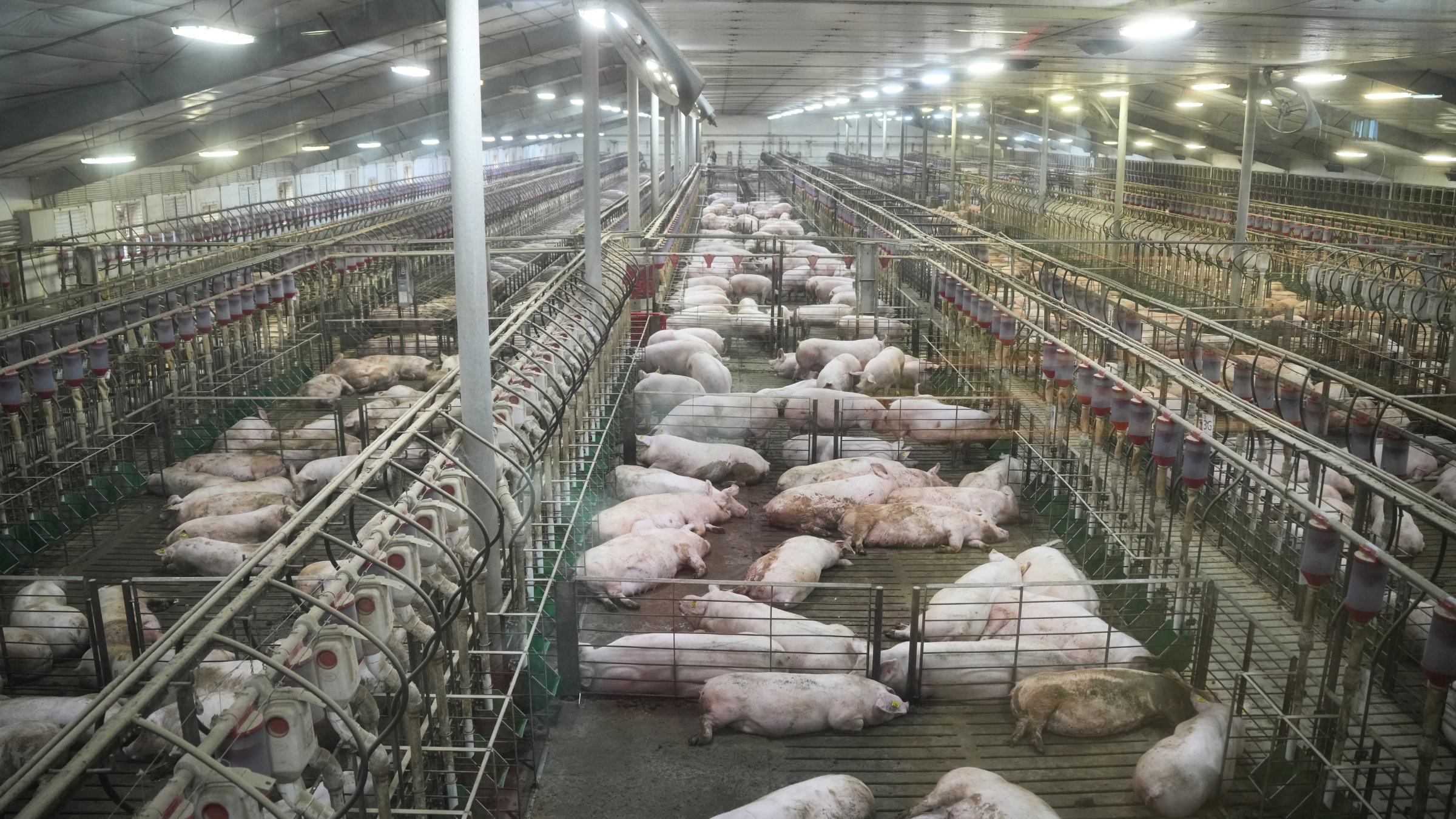
Modern Pig Farming systems are designed to bring greater control and efficiency to pig production. They often involve large, enclosed facilities with climate-controlled environments, automated feeding systems, and centralized waste treatment.
These improvements are primarily intended to address concerns such as water pollution, odour complaints from nearby communities, and the spread of diseases that can threaten both animals and public health.
From a regulatory and environmental perspective, these measures may represent progress. Improved waste management and stronger biosecurity protocols can help reduce environmental impacts and limit disease transmission between farms.
However, modernization in infrastructure does not necessarily translate into meaningful improvements in animal welfare.
Animal Welfare in Modern and Traditional Pig Farms
Regardless of whether a farm is considered “traditional” or “modern,” the vast majority of pigs raised for food are kept in intensive confinement systems.
This raises growing concern among animal welfare experts. Pigs are widely recognized as highly intelligent and social animals, capable of problem-solving, forming social bonds, and experiencing complex emotions. Yet in many industrial systems, their ability to express natural behaviours such as rooting, exploring, and interacting freely with other pigs is severely restricted.
Breeding sows are often confined in gestation crates, metal enclosures so small that the animals are unable to turn around. These cruel crates are designed to maximize efficiency and reduce fighting between animals, but they severely restrict natural movement and innate behaviour.
Piglets are typically separated from their mothers at a young age, and practices such as tail docking and teeth clipping may still be used in many systems.
While Modern Pig Farming facilities may be cleaner and more technologically advanced than older operations, the basic structure of industrial pig production often remains the same: large numbers of animals raised indoors in highly controlled environments with limited space and stimulation.
For the animals themselves, modernization may change the technology surrounding their confinement, but not necessarily the confinement itself.
A Missing Part of the Conversation
Public discussions about pig farming in Malaysia have often focused on environmental pollution, land use, disease outbreaks, and conflicts with nearby communities.
These are important issues. But they are not the only ones. We speak for the animals since they are the voiceless victims who suffer in silence.
As Malaysia reviews the future of its pig farming industry, the welfare of the animals themselves deserves to be part of the conversation.
Around the world, governments are increasingly reassessing practices such as gestation crates. Several regions, including the European Union and a growing number of countries and U.S. states, have introduced restrictions or plans to phase out the continuous confinement of breeding pigs in crates.
These changes reflect a broader shift in public expectations about how animals raised for food should be treated.
Malaysia now has an opportunity to consider not only how pig farming can become more sustainable and better managed, but also how standards can evolve to reflect growing public concern for animal welfare.
Looking Ahead: Asking the Missing Question
The government’s review could shape the future of pig farming in Malaysia for years to come. Ensuring environmental protection, public health, and economic stability will remain important priorities.
But modernization should not be measured only in terms of technology or infrastructure.
A truly forward-looking system should also consider the lives of the animals within it.
As Malaysia evaluates the next chapter of its pig farming industry, the public conversation may benefit from asking a simple but important question:
In the push to modernize pig farming, are we also prepared to rethink how animals are treated?
Farmers, policymakers, companies, and consumers all have a role to play in shaping that future. As awareness grows, more Malaysians may begin asking how the future of farming can reflect not only efficiency and sustainability, but also compassion.
And as this national review unfolds, the public may increasingly want to ensure that the needs and daily lives of animals themselves are not left out of the conversation.